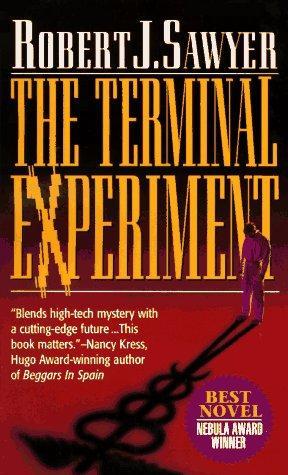
The Terminal Experiment
de Robert J. Sawyer
1995·333 páginas
Crítica
sem notas
1 prêmio
3 indicações
Sinopse
Dr. Peter Hobson inventa uma máquina que detecta um padrão cerebral que deixa o corpo após a morte, um padrão que muitos acreditam ser a alma. Para testar suas teorias sobre imortalidade e vida após a morte, Hobson e seu amigo Sarkar Muhammed criam três simulações eletrônicas da própria personalidade de Hobson. Quando pessoas contra as quais Hobson tinha uma rixa começam a morrer, ele e Sarkar devem tentar descobrir qual delas é a responsável. Mas todas as três simulações – duas modificadas, uma "controle" – escapam do computador de Sarkar, indo para a Internet e a World Wide Web. O livro ganhou o Prêmio Nebula de Melhor Romance em 1995 e foi indicado ao Prêmio Hugo de Melhor Romance em 1996. Sawyer recebeu uma bolsa de reserva para escritores do Conselho de Artes de Ontário em 1993 em apoio à sua escrita do romance.
Ver sinopse original (inglês)
Dr. Peter Hobson invents a machine that detects a brain pattern that leaves the body after death, a pattern many believe is a soul. In order to test their theories on immortality and life after death, Hobson and his friend Sarkar Muhammed create three electronic simulations of Hobson's own personality. When people Hobson had a grudge against begin to die, he and Sarkar must try to find out which is responsible. But all three simulations – two modified, one a "control" – escape Sarkar's computer, into the Internet and the World Wide Web. The book won the 1995 Nebula Award for Best Novel, and was nominated for the Hugo Award for Best Novel in 1996. Sawyer received a writer's reserve grant from the Ontario Arts Council in 1993 in support of his writing the novel. <a href="https://en.wikipedia.org/wiki/The_Terminal_Experiment">Wikipedia</a>